
Just as there are so many different stuffed toys, amigurumi, pillows, and projects you can make that require stuffing, there are also different types of stuffing that is more appropriate to different projects. As you plan out your stuffed project, taking into account yarn size and quantity, hook size, and accessories, take the time to also consider the right type of stuffing for the job.

Here are some things you may want to think about:
- What is the size of your project? The size will dictate how much stuffing you need, which could affect the cost and availability of whatever filler you use.
- Who is the project for? Toys and stuffed animals for infants and children have to be ultra safe, which means you don’t want any loose stuffing falling out or getting caught on little fingers.
- What sort of feel do you want your project to have? Some stuffed projects are meant to be hugged. Others are more for decoration. A floppy toy requires different types and amounts of filler to a living room sofa pillow.
- What is the density of the project? By this, I mean the density of the stitches holding the filler. Obviously, a fabric item can hold just about any kind of stuffing, but a crochet or knit piece with bulky yarn will have some space between stitches, so you’ll want a filler that won’t fall out.
- Finally, we get to Budget and Availability. Some fillers can be found at big box stores. Other, more specialized fillers, are more often found online. Some are more expensive that others for a given quantity. Maybe you can even reuse something you have around the house.

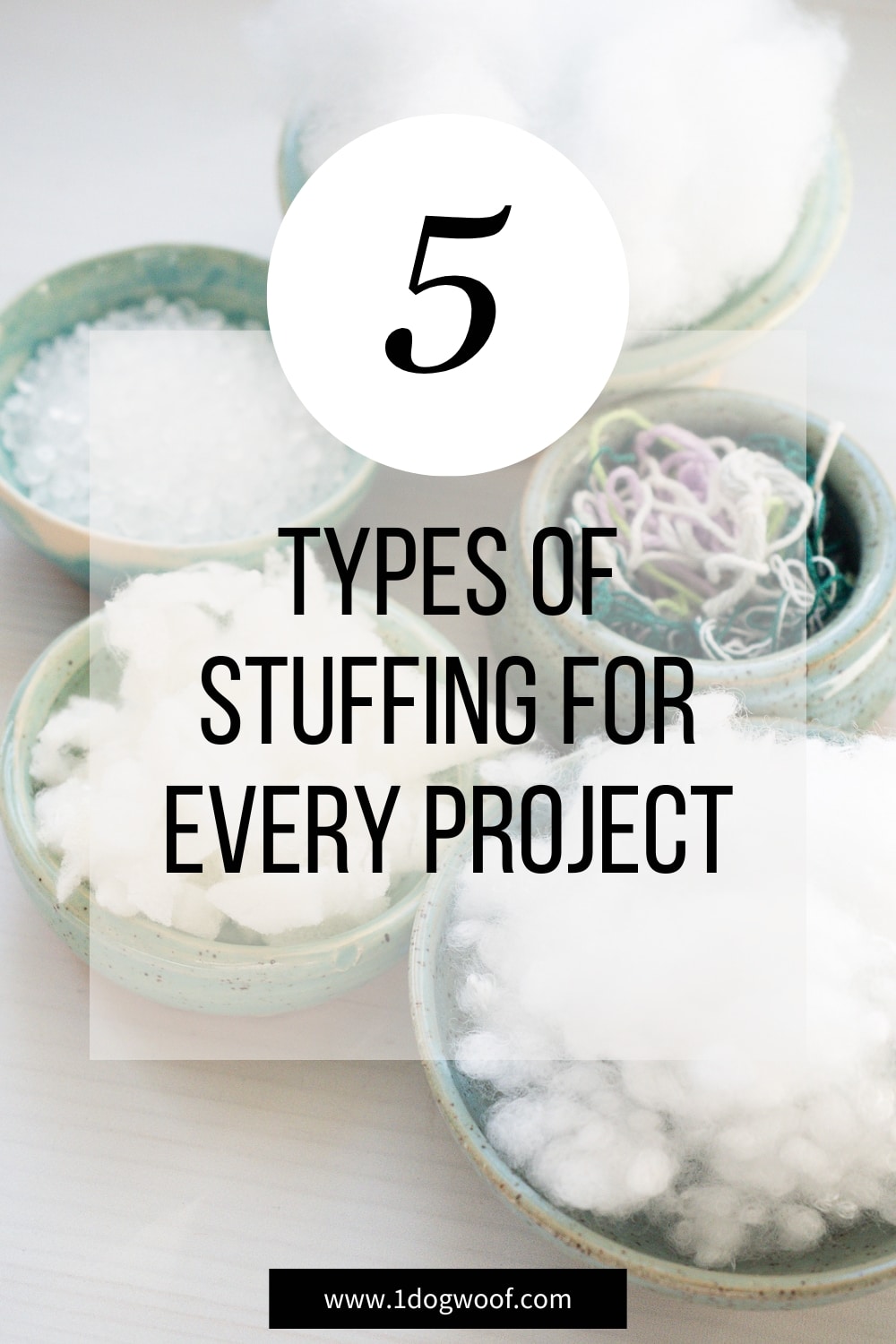
Let’s take a look at 5 different types of stuffing you can use for large and small amiurumi and other stuffed projects.
- POLYFILL
- CLUSTER FIBERFILL
- PLASTIC BEADS
- MEMORY FOAM PIECES
- YARN SCRAPS
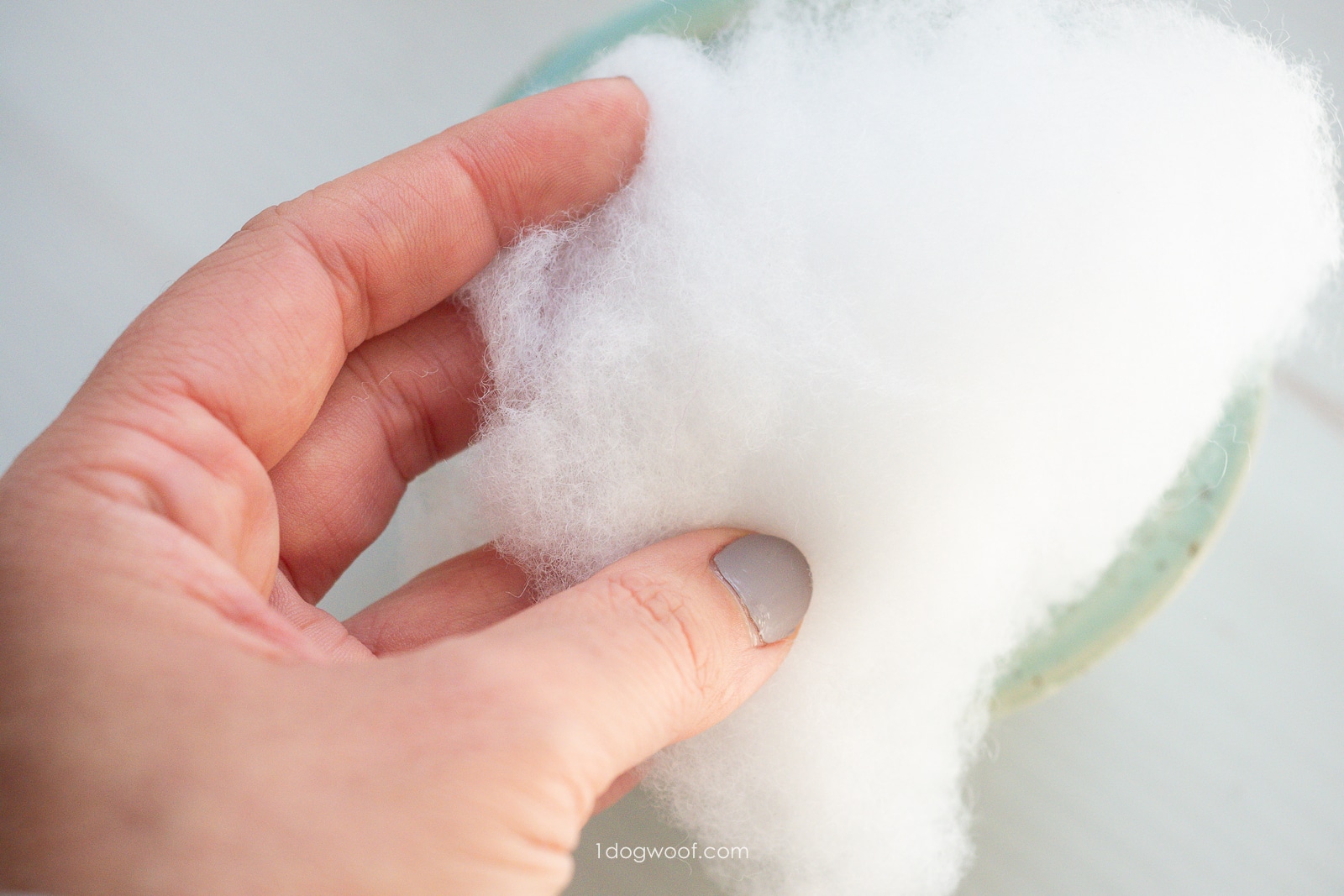
POLYFILL
Price and Availability: Polyester fiberfill is an affordable, easy to find filler. You can purchase it at most big box craft stores, and even stores like Walmart or Target.
Best Uses: This type of filler is great for large stuffed toys and oddly shaped pillows, as it covers a large volume of space. It also works well in projects that use bulky yarn, where there’s space between stitches.
Issues: When packed loosely, fiberfill can clump over time. A stuffed toy getting lots of hugs may get a bit warped and clumpy as the fiberfill moves around and bunches together inside the piece.
Things to Consider: You get less clumping if the filling is packed tighter, but then the toy may not be as snuggly or squishable.
Tips: One tip when using polyester fiberfill is to loosen it up and pull it apart a bit before stuffing into your crochet or knit piece. This can help fill in some smaller spaces and alleviate the clumping a bit.
BUY Poly-fil Crafter’s Choice Polyester fiberfill on Amazon

CLUSTER FIBERFILL
Like clusters of galaxies, the cluster fiberfill is made up of small rounded bits of fiberfill. When I discovered this filler, it was my go-to for all but the largest projects. It’s still a favorite for that typical soft, huggable feel.
Price and Availability: This type of filler is fairly affordable, and can sometimes be found in retail stores. You can also purchase it online.
Best Uses: This type of filler is very loose and fluffy, and doesn’t clump like the regular fiberfill. It fits in small spaces, and works well for small amigurumi. Even when packed very loosely, it doesn’t clump at all, so it’s perfect for arms and legs of dolls, and those tiny spaces where you want just a hint of a little extra padding.
Issues: Having a small size and cluster form makes this filler great for many projects, but you have to be more careful because of the size of the clusters. It is more easily snagged and pulled out of projects with even small-ish spaces between stitches, so you have to ensure your work is dense enough to hold this filler inside.
Things to Consider: This would not be a good option for projects crocheted with bulky yarn, where there are larger holes for the stuffing to fall through.
Tips: One workaround for the size issue is to use the regular clumping fiberfill around the outside edges of your toy, and use the cluster fiberfill to fill the middle core of the toy. Or just combine the two to lessen the effect of the clumping and have the the fibers stick together well enough to not fall out.
BUY Pellon PLOFT16 Perfect Loft Cluster Stuffing Fibers on Amazon

MEMORY FOAM
Shredded memory foam filler my newest stuffing option, mostly because of the incredibly fun bouncy, squishable feel it gives to amigurumi and stuffed toys.
Price and Availability: This filler is purchased online, and can be more expensive as it comes in larger packs.
Best Uses: The memory foam pieces do not clump, and are varied in size- there’s small pieces and larger chunks, so it can be used in both small and large projects. It fits well into small spaces, holds itself together and feels great when packed tightly. Larger chunks of memory foam works well in large volume to give it the elasticity of memory foam, but without the extra weight of a solid piece.
Issues: When doing a search for shredded memory foam filling, make sure you look at the size of the chunks, and the source of the material. Unlike the polyester polyfill, which is often advertised as hypoallergenic, I’m not sure where some of the large bags of memory foam pieces are sourced from.
Things to Consider: Because the foam pieces tends to stick to itself, and because the size of the pieces vary, it can be used in pieces with slightly larger stitches without it all coming out, but I’m sure it can be snagged if the holes are too large. I find it works best with inside a solid piece, packed fairly tight, to really enhance that memory foam feel.
Tips: For myself, I used the leftover pieces from my own memory foam pillow. I’ve slept on it for over a year with no allergy issues, and is advertised to have met certain health standards.
BUY Coop Home Goods Extra Oomph Fill, Cross-Cut Memory Foam

PLASTIC BEADS
Price and Availability: This type of filler can sometimes be found in craft stores, and also online. Plastic pellet filling can be more expensive for larger quantities, so is more affordable to use them judiciously in smaller projects.
Best Uses: Plastic filler beads or pellets are used to add weight to a stuffed project. In small quantities, you can use them in arms and legs of stuffed animals to make them extra floppy, or in the butt of a teddy bear to allow it to sit upright. In larger quantities, you’ll see them in weight blankets and bean bags.
Issues: The beads are too small to be used loose in any crochet or knit project, no matter how dense your stitches. Regardless of how you’re using the beads, they should be packaged in small portions, encased in a fabric enclosure.
Things to Consider: You can sew little bean bags to hold the pellets, pad your project with regular fiberfill, and use the bean bags to add weight to a specific part of your amigurumi. Even in weight blankets, the pellets are used in separately sewn portions, so they are kept to one area instead of rolling all around in a larger space.
Tips: For a no-sew option, you can encase the pellets in the foot end of pantyhose or a single sock, then tie a knot to close. Then you can use this bean bag hack in a stuffed animal, padding around it with another type of filler around it.
BUY Fairfield Poly-Fil Poly-Pellets, Premium Polyester Weighted Stuffing Beads
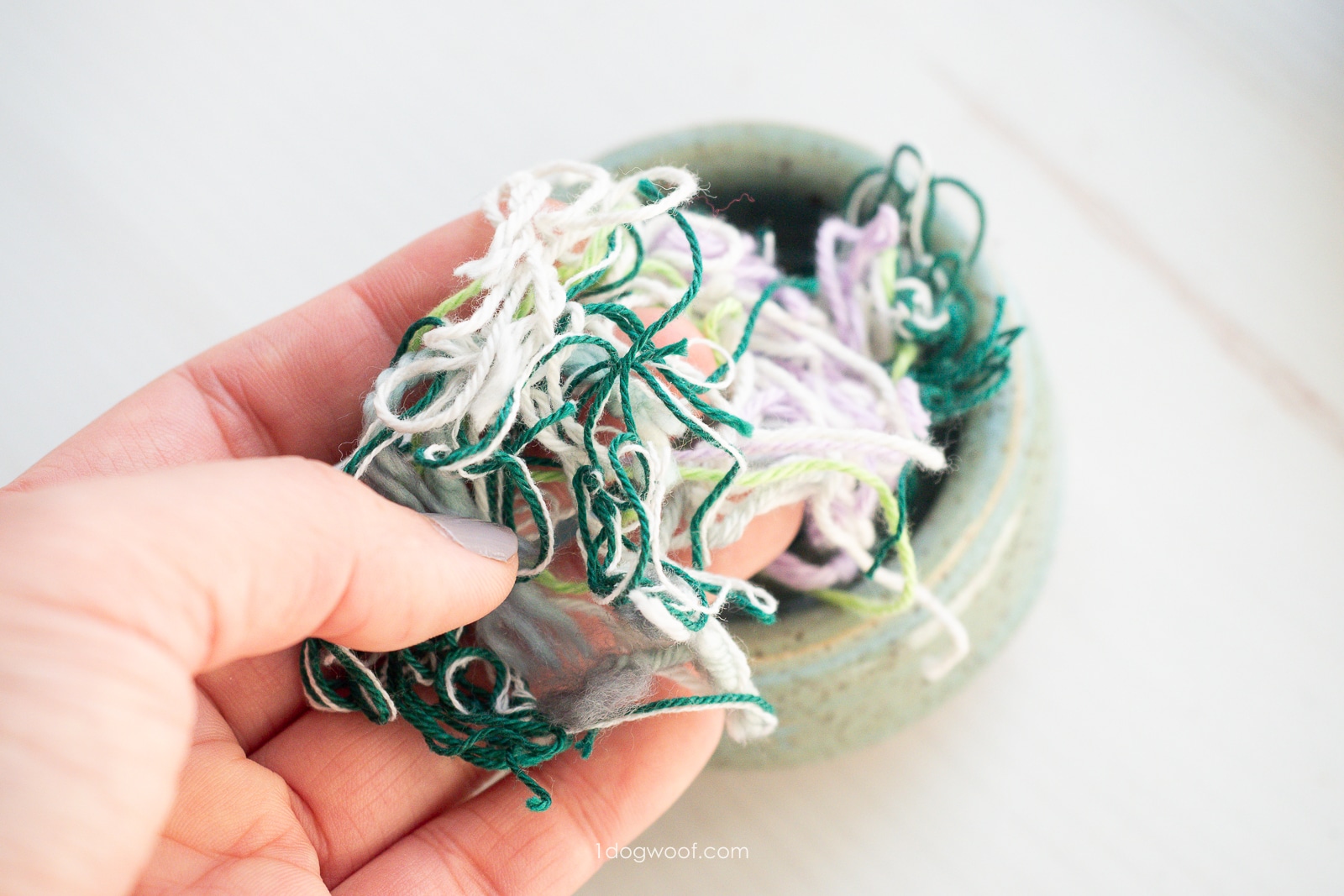
YARN SCRAPS
Price and Availability: This is the most affordable option, since it consists of the scraps we all have at home – any leftover yarn bits from playing yarn chicken on previous projects, the yarn scraps that hold skeins together, leftover yarn ends, and any bits and bobs that can no longer be worked into projects. Any of these can be saved up in a jar or basket, and then used as impromptu filler for small projects.
Best Uses: Yarn scraps are great for mixing with other types of stuffing to fill extra volume in larger projects.
Issues: If your project has holes in between stitches, you may be able to see different color yarns through the holes.
Things to Consider: As useful and free as this option is, unless you remember to set aside the scraps all the time, it will not be enough to fill a larger project unless you mix it with another type of stuffing.
Tips: One option is to combine yarn scraps and another type of filler to hide the colors while still increasing the volume of the filler.
OTHER OPTIONS
There you have it! 5 different types of stuffing to use in amigurumi or stuffed animals, pillows, bean bags or weighted blankets. Other ways to get stuffing is to wash and take apart old pillows for the stuffing inside, or save well-loved stuffed animals by storing them and using them as stuffing for a large bean bag. You can mix and match all the different types of stuffing to create a custom filler blend that works for your specific project, one that takes into account your project requirements and needs.

0 Comments